Salesforce in Copilot: The Two-CRM Skill D365 Pros Need
Salesforce now plugs into Microsoft Copilot next to Dynamics 365. What Copilotforce means for D365 careers, the skills to build and what to do this month.
On Tuesday at Microsoft Ignite, Satya Nadella stood on stage and announced a partnership with Salesforce. Not a court case, not a migration offer, a partnership. It is called Copilotforce, and if you work in Dynamics 365 CRM, it is worth ten minutes of your time this week.
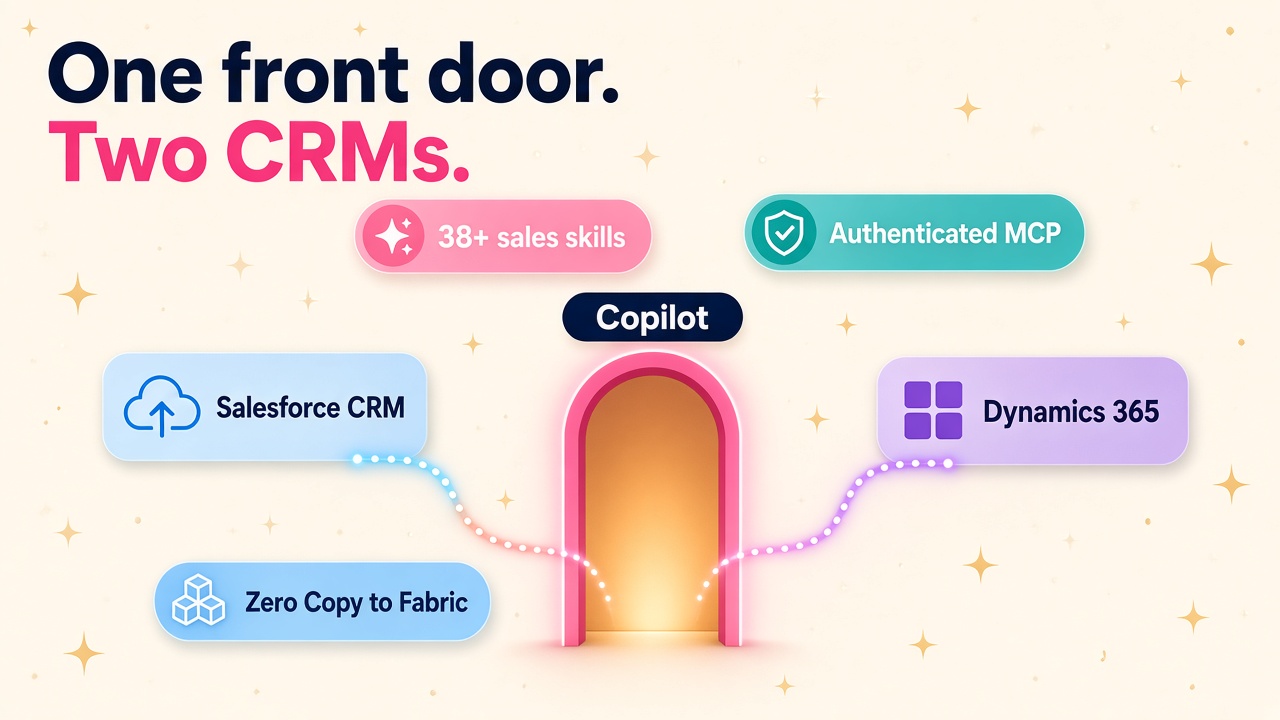
The short version: Salesforce now plugs into Microsoft Copilot as a first-class citizen, right alongside the Dynamics 365 plugins Microsoft launched on the same day. Copilot is becoming the front door to every CRM a business runs, not just Microsoft's own. I think that is very good news for D365 people, as long as you read it the right way.
What was actually announced?
Here are the facts, straight from the Microsoft announcement, the Salesforce announcement and the Ignite 2026 Book of News:
- Salesforce in Copilot is a plugin in public preview (beta) from 17 November 2026, with more than 38 prebuilt sales skills. Sellers can pull customer context and take supported CRM actions from inside Copilot, within their existing Salesforce permissions, through authenticated Salesforce MCP access.
- Named skills include Pipeline Review, Close Planning, Deal Review, Customer Health, Renewal Radar and Call Follow-Up. Work IQ adds context from Teams meetings, Outlook emails and documents in SharePoint and OneDrive.
- Writeback is guarded. Supported writeback actions to the CRM need explicit user confirmation and respect existing validation rules.
- Sales Cloud in Teams is in pilot with enterprise customers, with an open beta promised later this year.
- Zero Copy between Salesforce Data 360 and Microsoft Fabric. Data Federation, which lets Data 360 query supported OneLake data in place, is generally available. Sharing Data 360 data back into OneLake is in public preview.
- Accenture is the design and implementation partner and "customer zero". It has scaled Copilot to more than 740,000 people and runs Salesforce for 55,000 users.
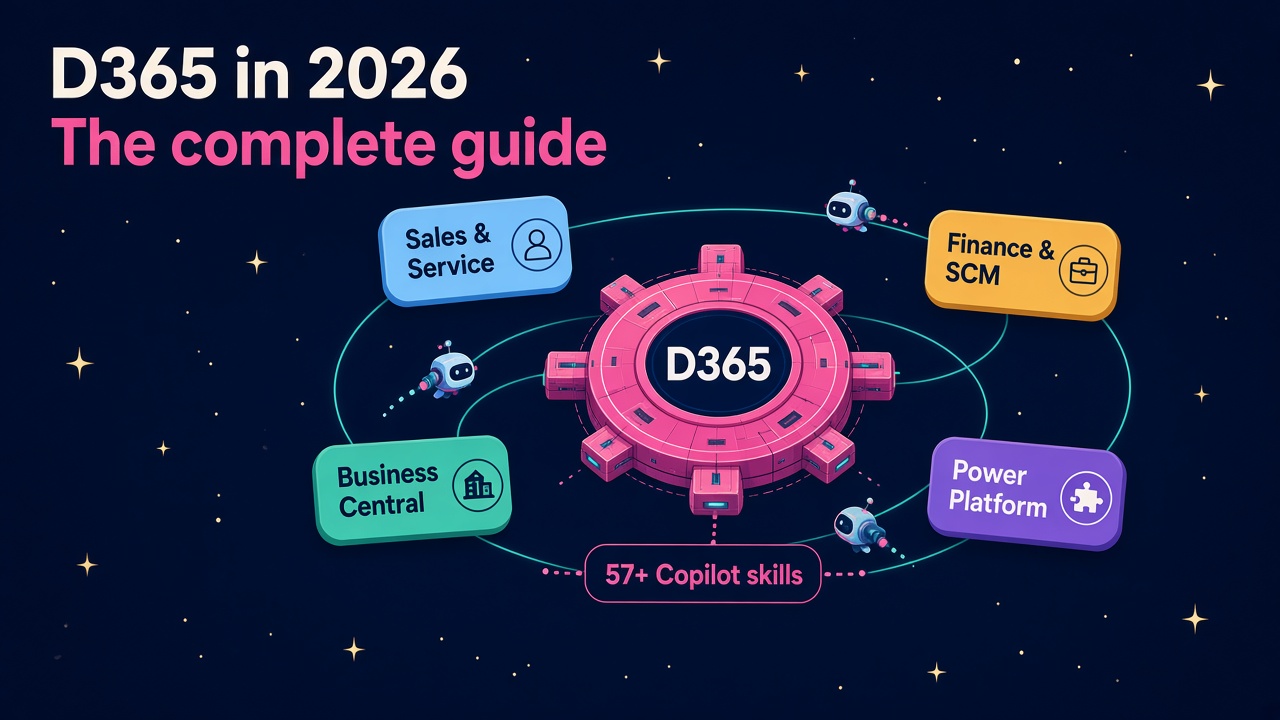
On the same day, Microsoft's Jeff Teper announced Dynamics 365 in Copilot, with the Sales and Customer Service plugins now delivering more than 57 business skills, and confirmed that Dynamics 365 Activate for CRM, the Salesforce to Dynamics 365 migration tooling, is generally available. MSDynamicsWorld's write-up neatly captures both halves: cooperate on Copilot, compete on the system of record.
So is Microsoft giving up on Dynamics 365 Sales?
No, and it is worth being clear on this because you will hear the hot takes on LinkedIn.
Microsoft is doing two things at once. It wants Copilot to be the place every seller starts their day, whatever CRM sits underneath. And it still wants that CRM to be Dynamics 365, which is exactly why Activate for CRM exists and why the first scenario it targets is Salesforce. We covered that migration angle in Dynamics 365 Activate: Salesforce Migration Work Is Coming.
Having worked around CRM and recruitment tech for a long time, I see this as a grown-up move. Most large companies do not run one CRM. They run Salesforce in one division, Dynamics 365 in another, something homegrown in a third, and an ERP that knows more about the customer than any of them. If Copilot only spoke Dynamics, it would only ever see part of the picture. Now it can see the lot.
Why this is good news for D365 professionals
The front door just got much bigger
Every company with Salesforce and Microsoft 365, which is a lot of companies, now has a reason to roll out Copilot plugins, Work IQ, MCP connections and Fabric. Those are Microsoft platform skills. The people who already know Copilot Studio, Dataverse, Power Platform and Fabric are the obvious people to wire it all up, and that is most of you reading this.
Mixed estates need people who speak both languages
The hardest projects over the next two years will not be "Salesforce or Dynamics". They will be "make our agents work across Salesforce, Dynamics 365 and Finance and Operations without anyone getting into trouble". A D365 consultant who can also hold their own in a conversation about Salesforce objects, permission sets and Data 360 becomes very hard to replace.
Migration work is still coming
When a company runs both CRMs side by side in Copilot for six months, someone in finance eventually asks why they are paying for two. That is when an Activate assessment lands on the table. Coexistence today is often the first step towards consolidation tomorrow, and D365 partners will be there for both.
Data is the real prize
The Zero Copy link between Data 360 and Fabric is the sleeper announcement. It means customer data from Salesforce and operational and financial data in Fabric can finally sit in the same analysis without brittle ETL jobs. If you know Fabric, OneLake and Power BI, you just became relevant to every Salesforce customer that also runs Microsoft data tooling.
What will employers actually hire for?
Here is my read on the roles and skills that get a lift from this, based on what was announced rather than wishful thinking:
- Copilot and agent architects who can design how a seller's day runs across Copilot, Teams and two CRMs, and decide which skills run where.
- CRM integration consultants comfortable with MCP, authenticated connectors, permission models and writeback rules on both platforms.
- Fabric and data engineers who can set up OneLake federation into Data 360, which needs things like an Entra app registration, Fabric tenant settings and lakehouse tables, according to Salesforce's own setup guide.
- Governance and security specialists who can explain to a risk committee exactly what an agent can read, what it can change and who confirms it.
- Migration leads who can run a Dynamics 365 Activate assessment and give a straight answer on whether consolidation makes sense.
If you want to see how this is already showing up in live roles, browse current Dynamics 365 jobs and keep an eye on the CRM and Power Platform listings over the next quarter. For pay benchmarks, our D365 salary data is a good sense check before your next review.
The skill to build: cross-CRM agent design
If I had to put one name on it, the skill is cross-CRM agent design. It is not a certification yet, but it is easy to describe:
- Know the plumbing. Understand how Copilot plugins, MCP servers and Work IQ fit together, and how the Dynamics 365 Sales plugin and Salesforce in Copilot sit side by side.
- Know the permissions. Be able to explain, in plain English, that Salesforce governs access and actions on its side while Microsoft applies its compliance controls to emails, chats and documents.
- Know the data. Be able to sketch where customer, operational and financial data lives and how Fabric and Data 360 can see each other without copying everything.
- Know the process. Map one real sales process, like renewals, from first signal to signed contract, and decide which steps an agent does, which a human confirms and which stay manual.
- Know the money. Copilot plugins and agents are not free. Being able to talk about cost and value with a straight face is a big part of being trusted with the keys.
None of this requires you to become a Salesforce admin. It requires you to be curious about the other side, which is a much lower bar.
A practical plan for this month
Here is what I would do between now and Christmas if I were a D365 CRM consultant:
- Read the three announcements end to end. Microsoft's, Salesforce's and Jeff Teper's Dynamics 365 post. It takes 30 minutes and you will be ahead of most people in your next client meeting.
- Get hands on with the Dynamics 365 Sales plugin in Copilot. You cannot explain the side-by-side story without using one side properly. Our earlier post on Dynamics 365 in Copilot is a good primer.
- Do a free Salesforce Trailhead module or two. Pick something on Sales Cloud basics and Data 360. You want vocabulary, not a new career.
- Build a small Fabric demo. A lakehouse with sample sales and finance data, a semantic model and a Power BI report. Data skills travel across every CRM.
- Write one page on a mixed-estate scenario. "Here is how a seller's renewal day works with Salesforce, Dynamics 365 Finance and Copilot." Share it with your practice lead or post it. It is the kind of thinking clients will pay for.
- Update your profile. Add Copilot plugins, MCP, Work IQ and Fabric where you have genuine experience. Recruiters search on these terms already.
What this means for partners and employers
For partners, Copilotforce is a reason to stop treating Salesforce-heavy customers as off limits. Many of them now have a Microsoft-shaped project waiting: Copilot rollout, Teams integration, Fabric analytics and, down the track, an honest conversation about consolidation. If you are a partner looking for people with that blend, our consultants directory and employer pages are a good place to start.
For customers, it is a reminder to buy on outcomes, not logos. Look at the products and vendors that already work across both ecosystems, and ask any partner how they would handle a two-CRM estate before you sign.
Where this is heading
I am genuinely excited about this one. For years the CRM world was a turf war, and consultants had to pick a tribe. Now the biggest software companies on the planet are agreeing that the seller's front door should be one place, with agents doing the legwork across whatever systems sit behind it. That opens up more work, not less, for people who understand how business processes, data and AI fit together. D365 professionals are already most of the way there.
What to do next
- Browse the latest Dynamics 365 and Power Platform jobs and note which ones mention Copilot, Fabric or Salesforce integration.
- Check where you sit on pay with our D365 salary guide.
- If you are a consultant, make sure your profile is listed in the consultants directory with your Copilot and Fabric skills front and centre.
- If you are hiring, post a role aimed at cross-CRM agent design and see who turns up.
Spend an hour on this before the year is out. It will pay for itself in your first 2027 client meeting.