Microsoft Q1 FY27 Earnings: What They Mean for D365 Careers
Microsoft's Q1 FY27 results put Azure up 48% and industry cloud up 10%. Here is what the numbers really say about Dynamics 365 demand, skills and hiring.
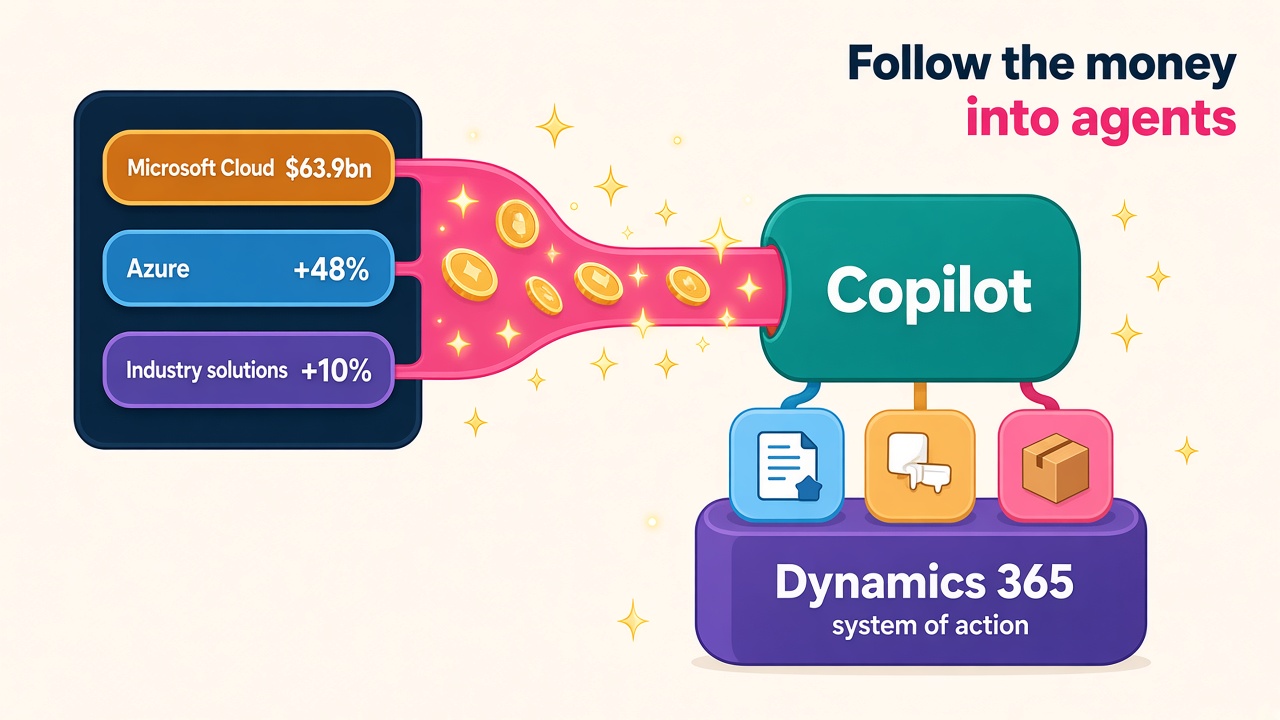
Microsoft reported its first quarter of fiscal 2027 on 28 October, and the headline numbers were enormous. Revenue was $92.3 billion, up 19%. Microsoft Cloud revenue hit $63.9 billion, up 30%. Azure grew 48%. Commercial remaining performance obligation, the pile of contracted revenue still to be recognised, rose 73% to $677 billion.
Then you scroll down to the line most of us in the Dynamics world actually care about, and it says Industry solutions cloud revenue grew 10%.
If you only read that one number you might think Dynamics 365 has hit a wall. I don't think it has, and I think the more interesting story is hiding in what Nadella said about where Dynamics 365 is going. So let's unpack it properly, then talk about what it means for your next role, your next hire or your next practice plan.
Where did the Dynamics 365 number go?
First, a bit of housekeeping, because a lot of people missed it. Microsoft changed how it reports. Dynamics 365 used to get its own growth line. From this year it sits inside a bigger bucket called Industry solutions cloud, which Microsoft's investor metrics page defines as Dynamics 365 (including ERP, CRM, Service, Power Apps and Power Automate), LinkedIn Talent Solutions, LinkedIn Sales Solutions and the Healthcare and Life Sciences cloud.
Under the old reporting, Dynamics 365 revenue grew 18% for fiscal 2026 (15% in constant currency), with the final quarter at 13%. On the restated basis, Industry solutions cloud grew 12% for fiscal 2026 and 10% this quarter.
So we are no longer comparing like with like. A 10% blended figure that includes LinkedIn's recruiting business is not the same thing as Dynamics 365 slowing to 10%. CFO Amy Hood said on the earnings call that the growth came from Dynamics 365 and LinkedIn Talent Solutions, "though booking trends continued to moderate". Her guide for next quarter is mid to high single digits for the whole bucket.
I'll be honest about that. Moderating bookings is a real signal, and nobody should pretend otherwise. But I'd read it as a change in how customers are buying, not a loss of appetite for business applications.
The quote that matters more than the percentage
The line I'd frame and stick on the office wall came from Satya Nadella. He said Microsoft is "bringing the business logic and capabilities of Dynamics 365 directly into Copilot and helping every organization stand up their own infinite SaaS factory." He also said Microsoft introduced 13 new Copilot skills across Dynamics 365 this quarter so customers can reach CRM and ERP capabilities in the flow of work.
Put that next to the rest of the call and the picture gets clearer:
- Microsoft described its business model as "expanding from per-seat subscriptions to include consumption".
- The number of Copilot customers actively consuming credits through usage-based billing grew over 75% in the quarter.
- Copilot daily users were up nearly 50% quarter on quarter.
- CRN reported more than 50 million agents now sit in the Agent 365 registry.
In other words, a growing share of the value Dynamics 365 creates is going to show up as agents doing work and burning credits, and some of that money gets counted under Copilot and Azure rather than a neat Dynamics seat line. Customers are increasingly paying for outcomes rather than for more people clicking through more forms, and Dynamics 365 is becoming the trusted engine underneath.
Headless CRM arrived the day after
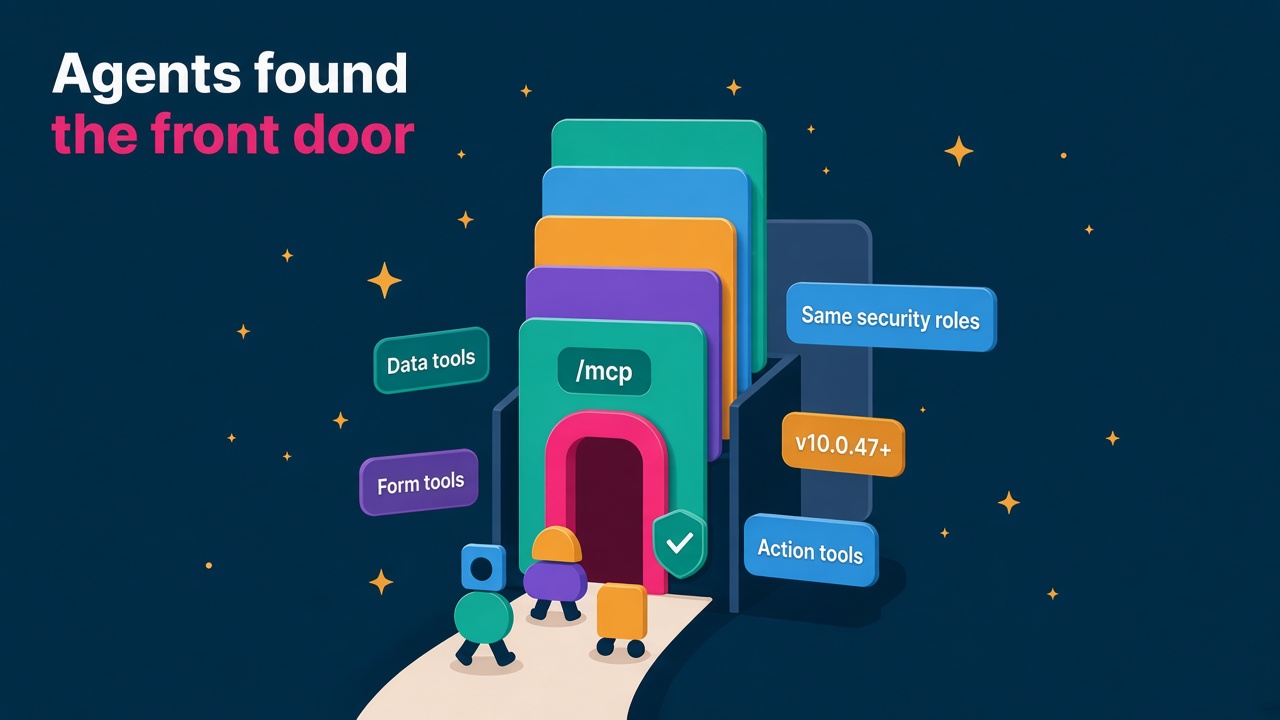
If you want proof this isn't just earnings-call poetry, look at what shipped on 29 October. Microsoft made the Dynamics 365 CX MCP Server for Sales generally available, describing it as a foundational step towards "headless CRM".
It exposes 59 governed tools across opportunities, leads, accounts, activities, pricing, quotes and orders. Any supported AI agent can discover and call them, and existing Dataverse roles and permissions still decide who can do what. A seller can ask an agent to qualify a lead, update a product line, recalculate pricing and turn an approved quote into an order without opening a form.
That sits alongside the 30 CRM skills for Copilot that went generally available on 8 October, and the ERP MCP server we covered yesterday. The direction is consistent across CRM and ERP. Dynamics 365 is the system of action. The interface is increasingly an agent.
So is this good or bad news for D365 careers?
Good, with a twist. I've watched this market through a few big platform shifts, and the pattern is always the same. When the way software gets bought changes, the work doesn't disappear. It moves, and the people who move with it early end up with the best jobs and the best day rates.
Here's what I think moves.
Less licence-led work, more outcome-led work
When customers buy seats, a big chunk of partner revenue comes from selling and deploying those seats. When customers buy outcomes, the money follows whoever can design, build and prove the agent workflows that create them. Expect more statements of work that say "automate quote to order for our field sales team" and fewer that say "roll out 400 Sales Enterprise licences".
Data and security become the whole job, not the boring bit
Every one of those 59 Sales tools runs through Dataverse security. If your security roles, business units and data quality are a mess, an agent will happily make the mess faster. Consultants who can tidy a Dataverse model, design sensible roles and explain data egress to a nervous CISO are going to be very, very busy. Microsoft's own connection guide warns that connecting Dynamics 365 to outside services lets data leave the Dynamics 365 FedRAMP High boundary. Somebody has to own that conversation.
Somebody has to watch the meter
Consumption billing is brilliant until the first surprise invoice. Agents that loop, retry or run on schedules nobody remembers can quietly chew through credits. I'm quite certain "agent cost governance" becomes a standard line in every D365 support contract within a year, and the people who can set budgets, monitor usage and prove return on credit spend will be worth their weight in gold.
Functional consultants get more valuable, not less
There's a lazy take doing the rounds that agents replace functional people. I think the opposite. An agent that advances deal stages needs someone who knows what the stages should be. An agent that posts journals needs someone who understands the close. The business logic Nadella wants to pour into Copilot comes from people who understand the business. Your process knowledge is the product now.
What hiring managers should take from it
If you run a D365 practice or an in-house team, the earnings call is a nudge to look at your hiring plan through a slightly different lens.
- Hire for "D365 plus agents", not D365 alone. A Sales or Customer Service consultant who has built even one working agent against MCP tools is a different hire from one who hasn't. Ask for it in interviews.
- Keep your strongest functional people close. They are the ones who will turn your customers' processes into reusable skills. Losing them to a competitor now would sting.
- Create a role for usage and cost. It might sit in your managed services team or with your Power Platform admins, but give it a name and an owner.
- Price some work on outcomes. Customers are already being taught by Microsoft to think in consumption and results. Partners who can quote that way will feel familiar rather than old-fashioned.
You can see who is hiring right now on our employers directory, and benchmark offers against current D365 salary data.
What D365 professionals should do this month
You don't need a year-long plan. Here are practical things you can do over the next few weeks:
- Read the CX MCP Server for Sales announcement end to end, then skim the tool list and pick three you'd use on your current project.
- Spin up a trial or sandbox environment and connect one MCP client to it. Copilot Studio is the obvious starting point, and tools like Grok Bot, Claude or ChatGPT are also worth trying as MCP clients if your organisation allows them. The goal is simply to watch an agent call a real Dynamics tool.
- Audit the security roles on one environment you know well. Write down what an agent acting as each role could do. You'll learn more from that one hour than from a week of webinars.
- Learn how Copilot credits and usage-based billing work, and how admins can set limits. Being the person in the room who understands the meter is a superpower.
- Rewrite your CV and LinkedIn headline to mention agents, MCP and Copilot skills you have actually used. Recruiters are searching for those words today. It also helps to look at how other people describe themselves in our consultants directory.
- Browse the D365 products catalogue and vendor directory to see which ISVs are already building agent features. It's a handy way to spot who might want your skills next.
The bigger picture
Microsoft just told the market that its cloud is growing at 30% on a base of over $63 billion a quarter, that customers are shifting to paying for AI by use, and that Dynamics 365 is being rebuilt as the business engine behind Copilot. A softer blended number for Industry solutions cloud doesn't change that direction. If anything it confirms the money is moving towards agents, and Dynamics 365 is where those agents get their data, rules and permissions.
That is a great place for a Dynamics professional to be standing. The platform you know is becoming more important to the AI story, not less. The job is to make sure your skills move with it.
What to do next
- Pick one agent use case on your current project and get it working against the Sales or ERP MCP server before Christmas.
- Have a look at the latest D365 jobs and note which ones mention Copilot, agents or MCP. That list will tell you where the market is going faster than any analyst.
- Check your pay against our salary data and, if you're ahead of the curve on agents, make sure your rate reflects it.